

Manoj Sharma

Making powerful AI understandable.

Product design leader for Copilot Notebooks. I shape how Copilot understands intent, gathers context from your work, and turns it into a trusted space for thinking and getting things done.

Portrait of Manoj Sharma
Manoj SharmaUX leader · Principal Product Design ManagerRésumé (PDF) LinkedIn
18Years at Microsoft
Leading by exampleManager, mentor & builder
88M+OneNote monthly users, at peak
1.8MWeekly Notebooks users (and rising)

Key projects

01 — 04
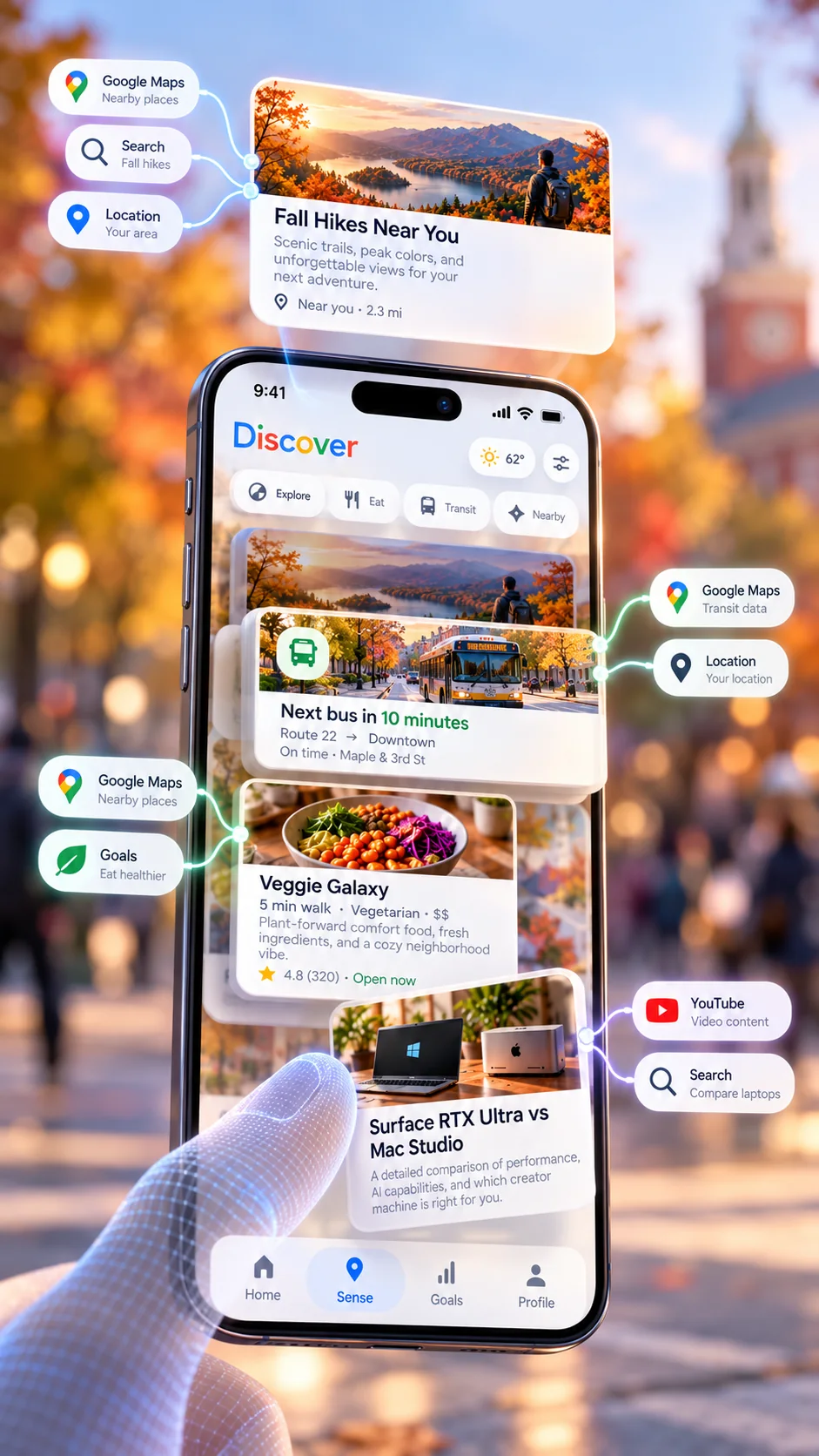
01MICROSOFT Copilot Notebooks & Workspaces Notebook-based AI workflows across Microsoft 365 — grounded chat, sources and AI-generated outputs in one place. 02MICROSOFT OneNote Product design for 88M+ monthly users at peak, and the AI workflows that brought Copilot into everyday notes. 03PERSONAL NoteCanvas.io A visual, AI-assisted canvas for notes, links, videos and calendars. Built and shipped in my free time. 04NEW · CONCEPT Concept: Discover on a phone, with nearby hikes, the next bus and lunch, each tied to the source it came from Discover, beyond the feed A design exploration for discovery on mobile: turning curiosity into meaningful action.

Latest exploration

04 — Concept film
04 — Exploration · Concept film

Discover, beyond the feed.

A concept for seamless Discovery.

The concept

Connecting intelligence to turn curiosity into meaningful action.

Search starts with intent and delivers results. Discover starts with results, but rarely helps us turn them into intent. What if Discover could go beyond passive scrolling — helping us understand, explore and act on what sparks our curiosity?

Beyond the product

Hover to peek · click to play

If AI only helps you do what you did before, faster, you’re using half of it. The other half is doing what you couldn’t do before.

Thoughts on design, leading and building

01

From end user to evolving user

A ten-step ladder can reach higher than a fifty-step ladder with broken steps at the bottom.

AI is evolving faster than people can keep up. For products used by millions, a standard user profile is increasingly hard to define. What AI can do and what people know how to do with it need a ramp between them.

Organizations often get caught up in branding jargon or showing off everything a model can do, only to be outdone weeks later. Meanwhile, users face an opaque interface: a chat box with little wayfinding. Imagining a real workflow requires knowing what the model is capable of. People routinely underestimate or overestimate its power.

Onboarding has never mattered more. It needs to help people build understanding as they go.

02

From leading design to leading building

Craft helps us make something well. Vision helps us decide what is worth making.

The tools of the trade have shifted dramatically. Craft, aesthetics, and prototyping still matter, but AI makes execution faster. That gives us more room to explore variations and push product boundaries. The lines between a Figma design, a coded prototype, and production code are blurring.

A design lead once communicated a vision for a team to divide and conquer. With AI agents, a designer can communicate that vision, build alongside it, and iterate continuously. They can direct the details without being a micromanager and run multiple variations in parallel.

The familiar sequence—requirements, spec, design, engineering handoff—suddenly feels backwards. Designers need a direction to explore. Building helps reveal the requirements. Research, prototyping, testing, and fixes can happen throughout, with AI agents and people contributing where they are most useful.

Human creativity, vision, and judgment become even more consequential. A strong designer knows what to accept, what to reject, and when to challenge what AI produces.

03

An evolving culture

People love agents doing the boring work faster, but not their shopping, painting or singing — the things they worked so hard to slow down in the first place.

People’s expectations of AI keep shifting. Access that once felt intrusive is becoming acceptable to some when the value is clear. What excites people, scares them, earns their support, or feels like cheating keeps changing.

Designers have to find the right level of familiarity, visibility, and control to make a product approachable and invite exploration. When so much happens out of sight, showing what an agent is doing, deciding, or waiting for becomes a central design challenge. Giving agents human qualities can help—or backfire—depending on the person and the activity.

04

Feature creep, unanswered basics

We tend to line up solutions to create a product. We should start by lining up the problems.

AI products can do more than traditional software, making feature creep almost inevitable. Competition and rising model capabilities keep adding to it. Every app starts promising everything, while becoming harder to understand and less distinct.

Generating an image in chat is impressive. Modifying it, managing variations, using it in another artifact, and finding it later can still be frustrating. These experiences need thoughtful product design based on understanding how humans function, and require more than AI to work well.

Understanding status, connecting things, prioritizing, synthesizing, and sharing all depend on understanding people and their real workflows.